
Why the whole package matters
System-wide planning
We look at the links between drainage elements, not one buried item at a time.
Site constraints respected
Utilities, loading and access are considered before sequencing the work.
Build stages coordinated
Excavation, installation and reinstatement are planned to fit together.
More than isolated drainage installs
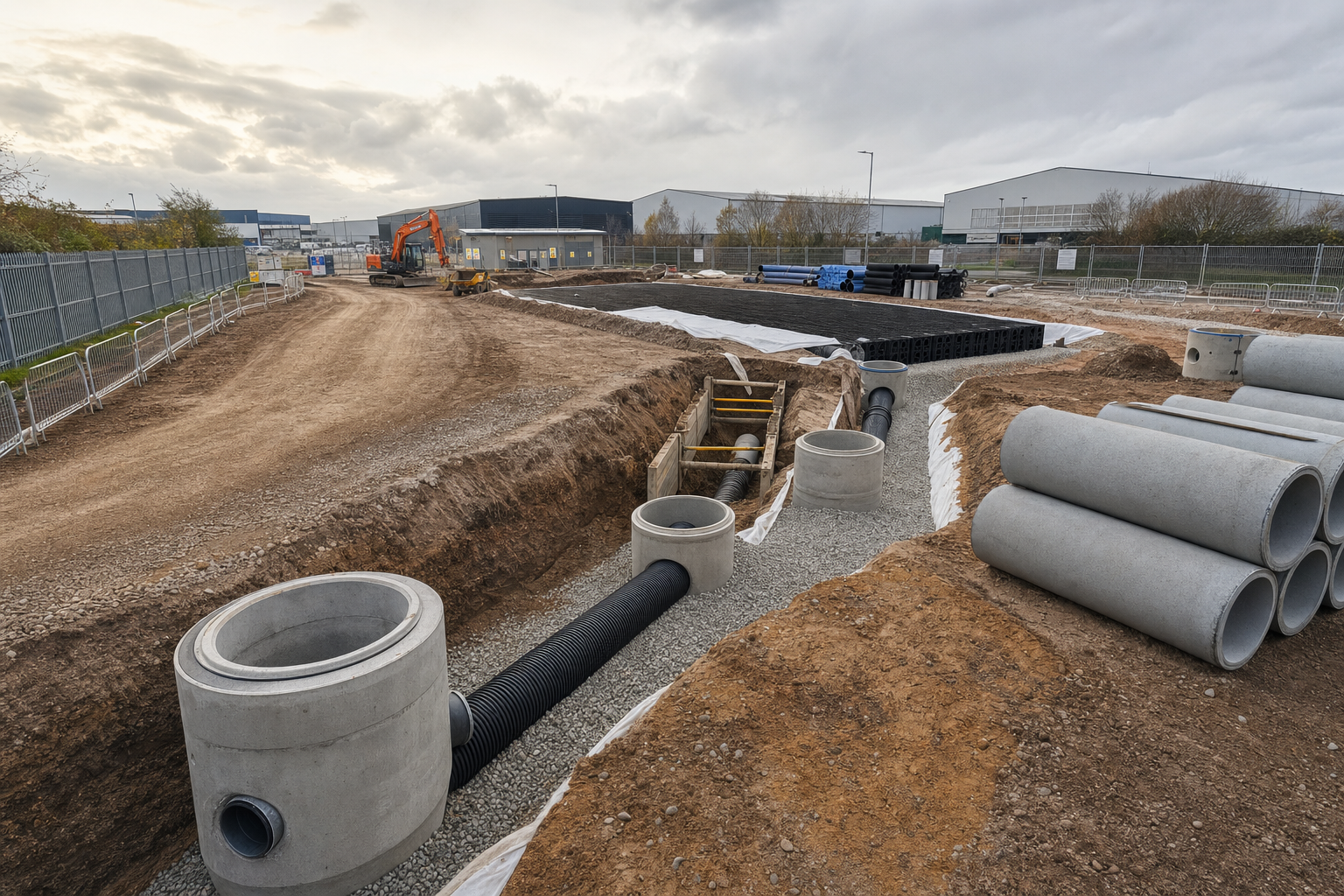
Drainage civil engineering covers the wider infrastructure that lets pipe networks, chambers, tanks, flow controls and outfalls work together as one system. The important questions go beyond where a single pipe or tank sits. With Septic Tanks NW, we look at levels, hydraulic capacity, structural loading, ground conditions and the links between each element, so the finished build is coherent from end to end. That joined-up view is especially useful on technically involved sites where one weak link can undermine a lot of good work around it.


Planned around site realities as well as drawings
Installation has to be workable in the field, not just neat on a plan. Choosing Septic Tanks NW means excavation, chamber construction, pipe installation, treatment assets and reinstatement are sequenced with plant access, existing utilities and safe working space in mind. We treat the drainage package as a connected piece of civil engineering, which helps the job move more cleanly from excavation through to the finished levels.
Frequently asked questions
What falls under drainage civil engineering?
It can include engineered pipe networks, chambers, tanks, flow controls, outfalls and the surrounding groundworks needed to connect them. The focus is on how the whole drainage package performs rather than treating each component as a separate job.
Why are loading and ground conditions considered early?
They affect how drainage assets are supported, where they can sit and what the finished area needs to cope with. Looking at those conditions early helps the installation suit the site instead of needing awkward changes once work is underway.
Can this be coordinated with wider site activity?
Yes, and that is often essential. We consider plant access, existing services, safe working space and practical sequencing, so the drainage work can fit more sensibly alongside other activity happening on the site.