
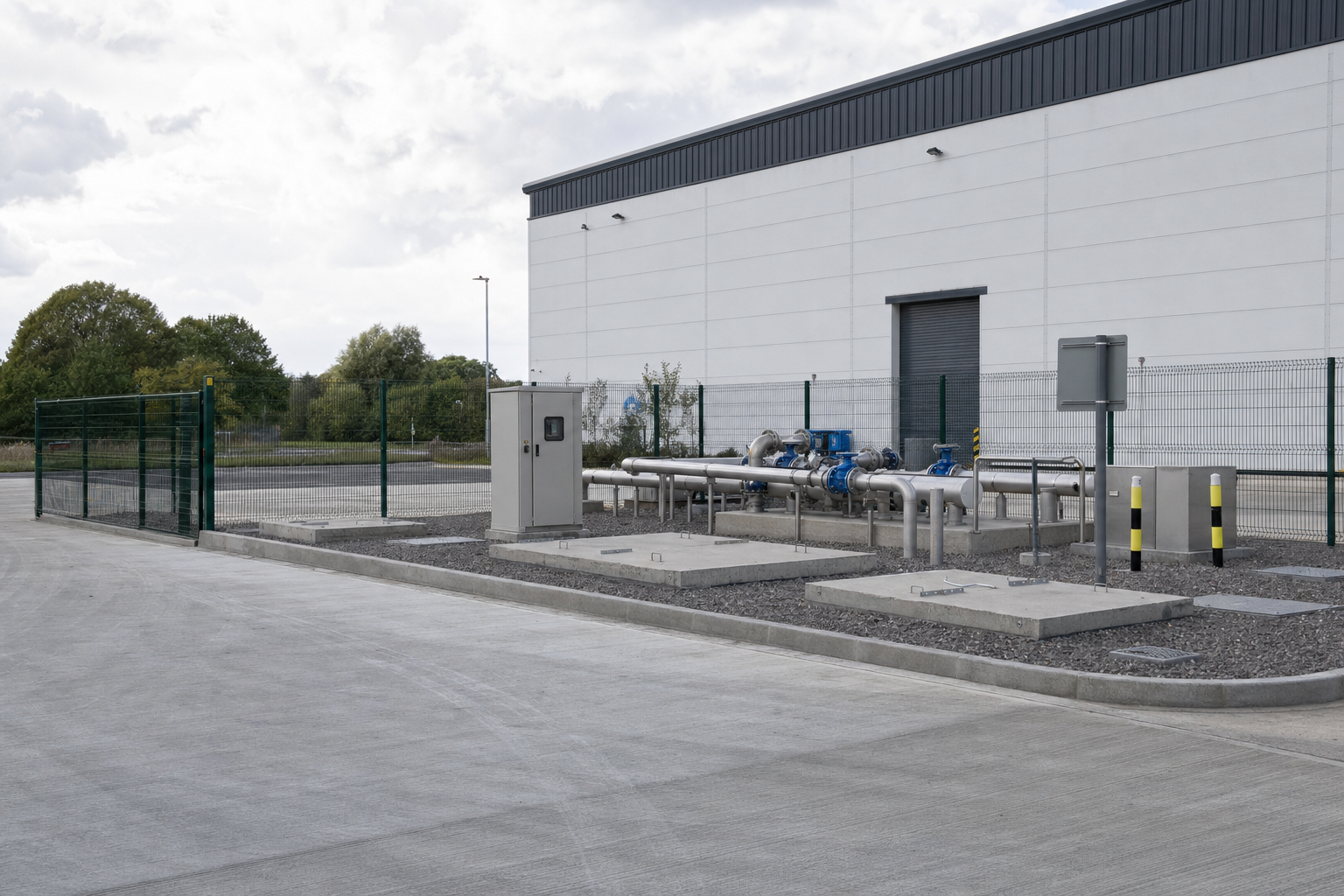
Why commercial work needs a different approach
Peak demand allowed for
We plan around fluctuating flows, not just average daily use figures.
Operational sites considered
Access, sequencing and working space are built around live site conditions.
Servicing kept practical
Plant access and maintenance needs are considered before the install begins.
Commercial systems need proper load planning
Commercial sewage treatment is not just a bigger version of a domestic setup. A working site can produce larger, more varied wastewater loads, with spikes in use that need to be planned in from the start. With Septic Tanks NW, we look at staff or visitor numbers, operating patterns, wastewater characteristics and likely future demand before the plant is chosen. That gives you a system sized for the way the site actually functions, rather than one that only works in theory.


Built around an operational site
Installation has to fit around practical site conditions as well as treatment performance. Through Septic Tanks NW, we coordinate excavation, plant access, power requirements, discharge arrangements and servicing provision with the wider drainage layout. We also keep working space, safe sequencing and day-to-day site activity in mind, because on a commercial job the treatment plant has to work for the operators as well as the wastewater.
Frequently asked questions
Why can't a domestic-sized plant serve a commercial site?
Commercial premises often have higher or more variable wastewater loads, and that can overwhelm a lightly specified unit. We plan around actual hydraulic and organic demand, so the chosen plant fits the use of the site rather than a basic assumption.
What information helps with commercial planning?
Useful details include staff or visitor numbers, operating hours, wastewater type, discharge route, access and any expected growth in demand. That helps us look beyond the tank itself and plan the full installation in a practical way.
Can the work be planned around an active site?
Yes, that is a key part of the discussion on commercial jobs. We consider excavation safety, plant access, deliveries, working space and how the installation can be sequenced to stay practical alongside other site activity.