
Why foul drainage needs a proper layout
Falls kept accurate
Good gradients help wastewater move properly without creating avoidable issues.
Access points included
Chambers and ventilation are planned so future maintenance stays practical.
Linked to treatment correctly
The network is matched to the inlet level and capacity of the receiving system.
Getting wastewater where it needs to go
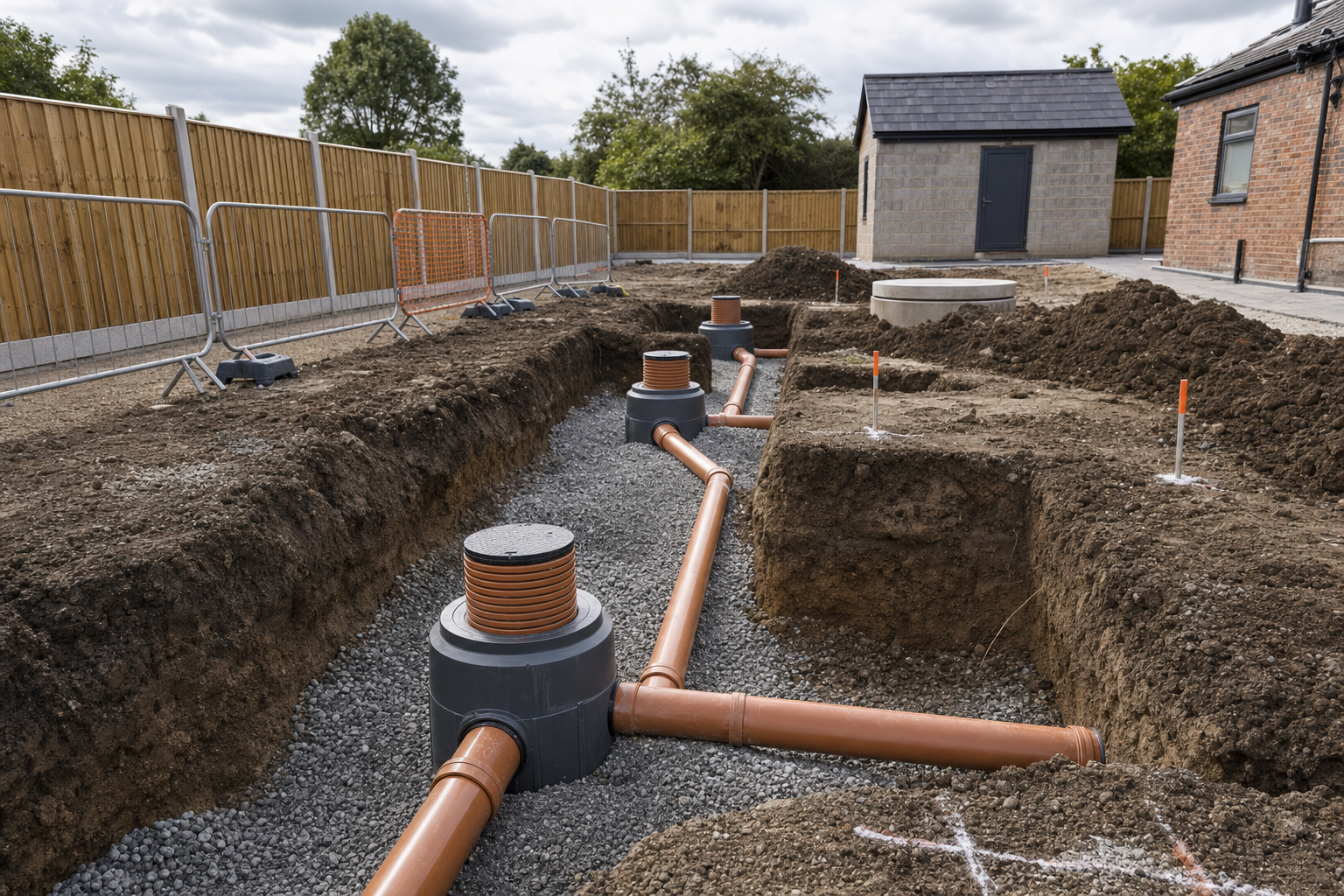
Foul water drainage carries wastewater from toilets, bathrooms, kitchens and utility areas to the final treatment or discharge point. That may be a sewer, a septic tank or a sewage treatment plant, and the route to it needs proper planning. With Septic Tanks NW, we look at pipe sizing, gradients, ventilation, branch connections, building positions and ground levels so the network can flow cleanly and stay maintainable. Small details underground have a habit of becoming large headaches once the property is in daily use.


Built around the receiving system
Trenching, bedding, pipe laying, chamber work, testing and reinstatement all need to tie back to the capacity and inlet level of the system receiving the wastewater. Through Septic Tanks NW, the foul network is coordinated with the tank or treatment plant it serves, rather than treated as a separate exercise. That joined-up approach helps avoid awkward connections, poor falls or a system that looks complete but does not work as cleanly as it should.
Frequently asked questions
What does foul water drainage carry?
It carries wastewater from toilets, sinks, baths, showers, kitchens and utility facilities to a sewer, septic tank or treatment plant. Because it handles used water, the route, falls and receiving system all need to be planned with care.
Why do gradients and ventilation matter so much?
The right falls help wastewater flow as intended, while ventilation supports the system's performance and future reliability. Those details may not be visible once the ground is closed, but they make a big difference to how well the drainage behaves.
Can foul drainage be installed with a new tank or treatment plant?
Yes, and coordinating the work often produces a cleaner result. Planning the foul network with the tank or plant means the pipe runs, connection levels and access points can all be set to suit the receiving system from the outset.