
Why are the surrounding details important
Built around the objective
The treatment stages are selected to suit the water issue being addressed.
Flow and space balanced
Capacity, footprint and access are considered together before installation.
Site links not ignored
Pipework, drainage and controls are planned as part of one overall layout.
The treatment starts with the water itself
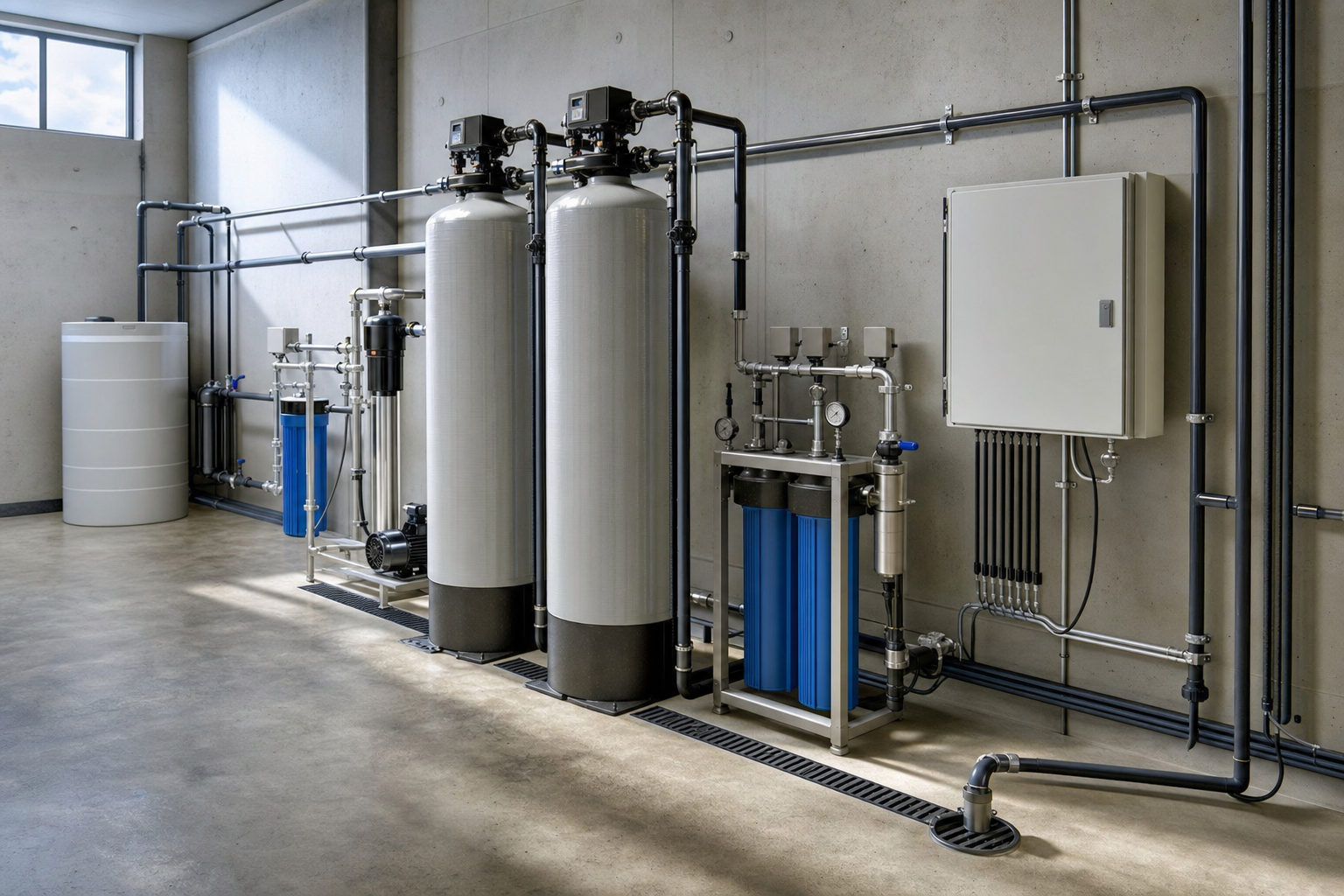
A water treatment system needs to be planned around the source of the water, what it will be used for and the quality issue that needs dealing with. That may involve screening, settlement, filtration, dosing or disinfection, depending on the treatment aim. With Septic Tanks NW, we look at flow rate, capacity, space, power and site layout before installation begins. That helps keep the finished plant practical to run and realistic for the way the site will use it.


Installed as part of the wider site layout
Treatment vessels do not sit in a vacuum. Through Septic Tanks NW, connecting pipework, control equipment, inlet and outlet arrangements, drainage links and maintenance access are all considered as part of the installation. We also keep safe servicing in mind from the outset, because a plant that technically fits but is awkward to inspect or maintain soon becomes a nuisance rather than an asset.
Frequently asked questions
What affects the design of a water treatment system?
The starting point is the water source, the intended use and the contaminant or quality issue involved. From there, we look at flow, capacity, space, power and maintenance needs, so the plant is chosen around the job rather than a standard template.
Can different treatment stages be combined?
Yes, water treatment often uses a sequence of stages such as screening, settlement, filtration, dosing or disinfection. The combination depends on what the system needs to achieve and how the treated water will be used on site.
Why does drainage matter on a water treatment install?
A treatment plant still needs sensible inlet, outlet and surrounding drainage arrangements, along with safe access for maintenance. Looking at those connections early helps the system fit the wider site, rather than creating awkward workarounds later.