

What helps surface water stay under control
Runoff planned properly
Collection capacity and underground pipework are set around the site conditions.
Storage where needed
Attenuation and flow control can be built into the layout when required.
Access left for checks
Maintenance points are included so the system can be inspected and cleared.
Managing rainwater before it causes trouble
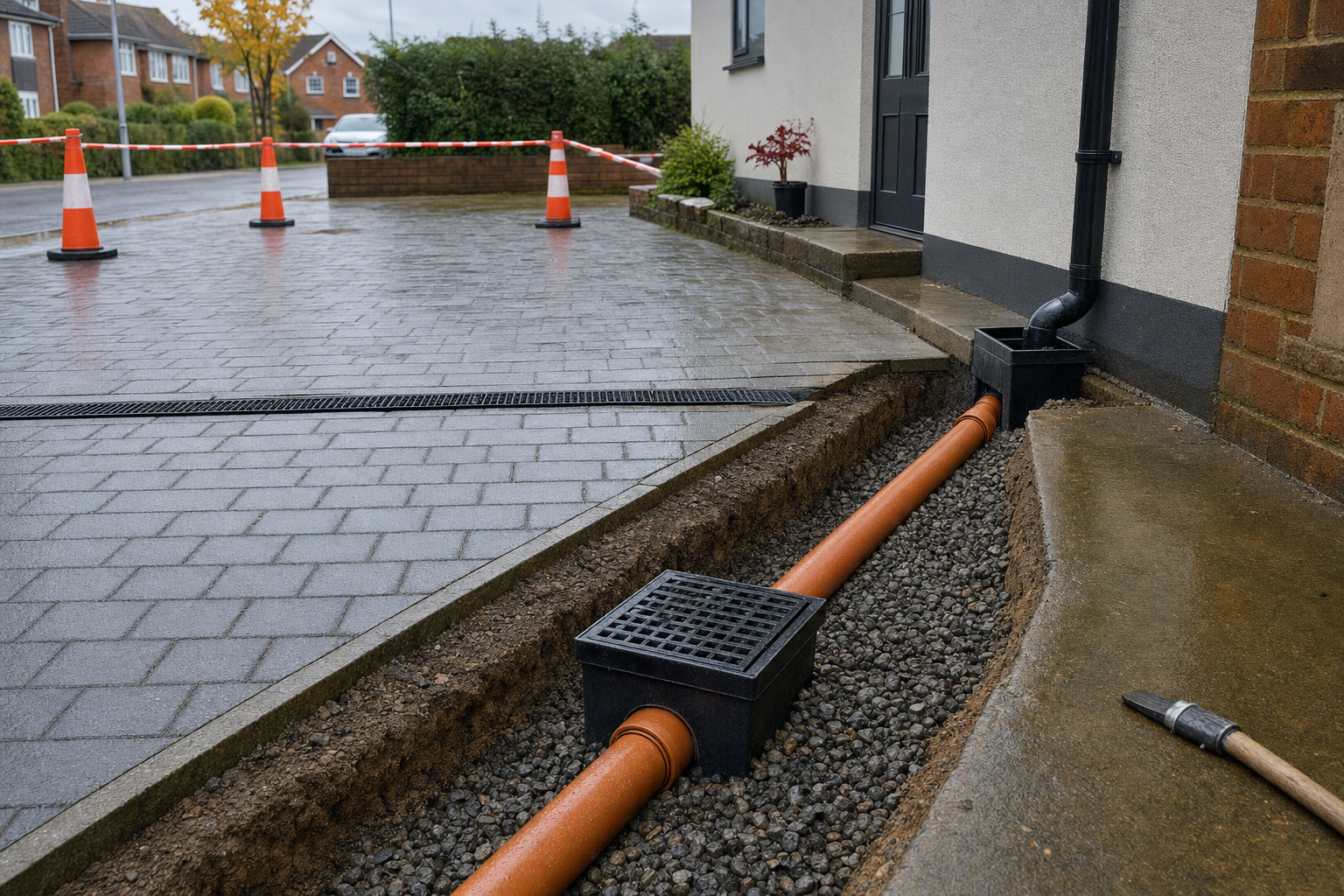
Surface water drainage deals with rainfall from roofs, yards, access roads and other hardstanding, and the job is to move it in a controlled way rather than let it sit where it lands. Collection can involve gutters, gullies, channel drains and catchpits, followed by underground pipework set to the right levels. With Septic Tanks NW, we plan around the site conditions, the likely runoff and the available discharge arrangement, so the system does more than just chase puddles from one spot to another.

Collection, storage and release in one plan
Some sites need more than straightforward collection and discharge. Choosing Septic Tanks NW means attenuation tanks, flow-control chambers and the surrounding surface water network can be planned together where peak runoff has to be restricted. We also keep maintenance points accessible, because a drainage layout that cannot be checked easily tends to reveal that weakness in the wettest and least convenient weather possible.
Frequently asked questions
What does surface water drainage cover?
It manages rainfall from roofs, yards, driveways, access routes and other hard surfaces. The goal is to collect runoff, move it safely and avoid standing water, local flooding or uncontrolled discharge across the site.
How do you decide where the water should go?
That depends on site conditions and the drainage requirements in place. We look at suitable discharge, infiltration or attenuation options, then plan the levels, pipework and collection points so the chosen route works properly.
When are attenuation tanks or flow controls needed?
They are useful where peak runoff needs to be stored and released at a controlled rate instead of being discharged too quickly. Planning those parts together with the wider drainage layout helps the whole system behave more predictably in heavy rain.